Publications
-
 Mythos Zuhören – Bemerkungen zur Diskursphänomenologie gerichteter Aufmerksamkeit
Based on the omnipresence of euphemistic talk about listening, the essay examines the network of relationships between listening and discourse. A widespread myth, in which listening is understood in isolation as a replicative action and the imponderables of listening are systematically covered up, is contrasted with the assumption that listening is language in contradiction and as such constitutive for discourse and vice versa. The question is about the possibilities of a sociolinguistics of listening and in particular about a conceptual classification of listening in the field of tension between the positivity of speech and the intentionality of listening. I speak of discourse phenomenology, without overlooking the fact that this also breaks up a scientific-historical juxtaposition of discourse analysis and phenomenology.
-
 Zukunft jenseits des Marktes. Demokratie und gesellschaftliche Naturverhältnisse in sozialistischen Utopien
The almost constantly recurring crises of the democratic order and relations between humans and nature in our age of the Capitalocene are currently reviving debates on economic models beyond the capitalist market economy.
-
 Ritual und Experiment – Versuch einer Annäherung an die Natur
The relationship between man and nature is subject to constant change. While nature was long considered threatening and alien, the idea of man in harmony with nature developed in the 16th century. Another profound change in this relationship has been accompanied by industrialisation and rapid urbanisation since the 19th century. The relationship between humans and nature is becoming unbalanced and jeopardises the survival of many species, including humans, on this planet. The environmental debate that has been ongoing since the 1960s has only been able to change this to a limited extent. Rather, there seems to be a persistent inability – a ‘blind spot’ – to (re)establish and maintain socio-ecological relationships with our habitat. The urgent question arises as to how we can get closer to nature again and which strategies appear helpful for this.
-
 Contradiction Studies – Exploring the Field
“Contradiction” is a core concept in the humanities and the social sciences. Beside the classical ideas of logical or dialectical contradiction, instances of “lived” contradiction and strategies of coping with it are objects of this study. Contradiction Studies discuss the many ways in which explicit or implicit contradictions are negotiated in different political or cultural settings. This volume collects articles that tackle the concept of contradiction, practices of contradicting and lived contradictions from a number of relevant perspectives and assembles contributions from linguistics, literary studies, philosophy, political science, and media studies.
-
 Widerspruchsresponsive Nachhaltigkeit
The EU’s free trade agreement with New Zealand fails to establish a critical concept of sustainability On July 9, 2023, the European Union and Aotearoa New Zealand concluded a comprehensive free trade agreement, which the European Commission describes as the most ambitious agreement ever with regard to sustainability issues. A closer look reveals that the scope of regulation is more comprehensive and progressive in many respects than in other agreements. Nevertheless, deficits can be identified in the design of the dispute settlement procedure, which are also due to the fact that the sustainability chapter is unable to establish a critical concept of sustainability that is sensitive to its contradictions. Findings from Contradiction Studies can help to fill this gap. Contradictions are associated with the concept of sustainability as it is used in the agreement. Only its recognition makes it possible to negotiate these contradictions at a legal level. To this end, the dispute settlement procedure must be made more effective with the involvement of civil society actors.
-
 Multidirektionale Lexik in der Diskursgeschichte des 20. Jahrhunderts
In Friedrich Markewitz, Stefan Scholl, Karsten Schubert & Nicole Wilk (eds.), Kommunikative Praktiken im Nationalsozialismus. 173–205. Göttingen: V&R unipress. ISBN: 978-3-7370-1612-4
-
 Zeitliche Vielfalt – Erscheinungsformen von Zeit und die Aufgabe der Philosophie
Proceedings of the symposium Zeit · Geist · Gehirn. Neurowissenschaft und Zeiterleben 2021.
-
 Aristokratie der Buchreligionen? Heilige Schriften aus religionswissenschaftlicher Perspektive
In Konrad Schmid (ed.) Heilige Schriften in der Kritik. XVII. Europäischer Kongress für Theologie (5.-8. September 2021 in Zürich). 643-658. Leipzig: Evangelische Verlagsanstalt. DOI: 10.5771/9783374072286
-
 Working Paper “Einrichtungsantrag Contradiction Studies – Konstellationen, Heuristiken und Konzepte des Widersprüchlichen, Lesefassung”
The Research Training Group 2686 Contradiction Studies researches the formation, negotiation and explanatory limits of contradiction.
The point of departure is the assumption that the ordering figure of contradiction with the imperative to resolve contradictions is often in tension with everyday experiences of contradictions in living together. Constellations of contradiction, contradiction avoidance, contradictions and practices of contradiction are therefore systematically researched and established as objects of investigation in the humanities, social sciences and law. The research group combines discourse-, narrative- and text-centred approaches with ethnographic and other qualitative-empirical methods. On the basis of case studies and genealogically or analytically orientated projects, the Centre carries out conceptual and theoretical work. This aims to re-evaluate contradiction, contradictions and contestation in their empirical constellations, heuristic functions and ontological dimensions – also in response to post- and decolonial discussions on the cosmopolitanisation of knowledge production.
-
 Contradiction Studies – Exploring the Field. An Introduction
Since antiquity in Greece, the Law of Non-Contradiction (LNC) is considered to be the foundation of all philosophy. As Aristotle maintains in Metaphysics, “the same attribute cannot at the same time belong and not belong to the same thing and in the same respect” (1005b, 19–23).
-
 Agency and Incentives of Diasporic Political Influencers on Facebook Malawi
This article examines the agency and incentives that drive the activism of diasporic political influencers on “Facebook Malawi,” an online imagined political community. In their seminal work on “social media dissidents” and “social media self-made activists” in the Global South, Matsilele and Sharra demonstrate that social media activists engage with different strategies to initiate movements, mobilize citizens, and create their brands in strong opposition to authoritarian regimes which repositions them as freedom fighters in the eyes of the masses and enemies of the state. Correspondingly, we frame diasporic political influencers as actors aided by digital technologies who engage in “long-distance nationalism” on Facebook against authoritarianism in the homeland. We deploy a qualitative mixed methods approach to analyze Facebook data of two diasporic political influencers, Onjezani Kenani and Manes Winnie Hale, who gave informed consent to use their Facebook data generated in 2018 and 2021, a period preceding and following the 2019 Malawi tripartite elections. A thematic analysis of 250 Facebook posts and interview data with the two influencers illustrates how they exercise their agency in their quest for a vision of a better Malawi while navigating a complex and ambivalent web of online and offline threats, incentives, and interests. Implicated in the political communication and mobilization of the two are different strategies that include verbal inventiveness, trolling, and exposing. The article also shows how the concept of long-distance nationalism needs to be adapted in studying diasporic political influencers.
-
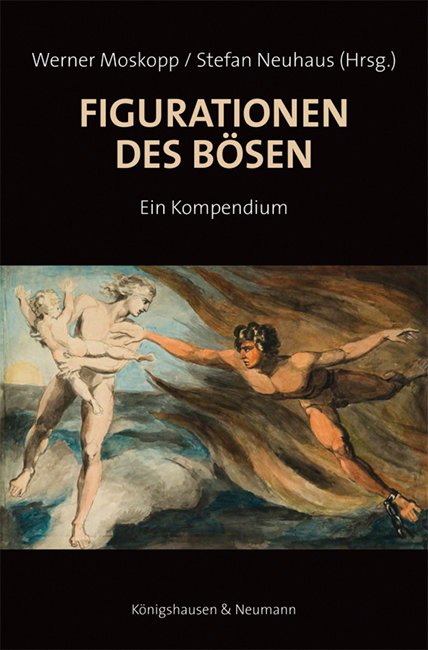 Hagen von Tronje: Vom Antagonist zum Bösewicht zum Antiheld. Überlegungen zur diachronen Entwicklung und Rezeption einer Antagonistenfigur
In Moskopp, Werner & Stefan Neuhaus (Hrsg.), Figurationen des Bösen. Ein Kompendium, 185-198. Würzburg: Königshausen & Neumann.
-
 Minorities and Majorities, Marginality and Centrality. An Introduction
In Hanna Acke, Silvia Bonacchi, Carsten Junker, Charlotta Seiler Brylla & Ingo H. Warnke (eds.), Religious and national discourses. Berlin/Boston: de Gruyter Volume 33 in the Series Diskursmuster/ Discourse Patterns eBook ISBN: 9783111039633 PrintISBN: 9783111027739
-
 Corps et capital dans le roman français du XIXe siècle. Körper und Kapital im französischen Roman des 19. Jahrhunderts
The living body and the capitalist thinking of the modern economy seem to be irreconcilable objects. Nevertheless, their history and perception have been inextricably linked, at least since the times of industrialization and capitalization in the 19th century. Our volume follows this entangled history and the various contradictions it develops.
Since Pierre Bourdieu, we known that the body forms an incorporated cultural and social capital. It is a commodity and means of production, a sign of belonging to a social class, a place where sex, gender and power relations are negotiated or a pretext for social exclusions and racism. The body is the object of punishments, sanctions and social control, a support for affects, obsessions and illnesses as well as a site of rebellion and resistance. The 19th century novels analyzed in the contributions to this volume tell all this. From the perspective of current body studies, we propose a new reading of the great stories from Balzac to Zola, via Mirbeau, Maupassant, Louise Michel, Georges Sand, Rachilde, Eugène Sue and Huysmans to demonstrate, through their texts, how the images of the body and the policies of capital are entangled and, thus, form a central part of the imagination and the memory of 19th century French (and Northern/Western) society.
Contributions in French and German.
-
 Die Region Bremen. Herausforderungen der regionalen Verflechtung der Stadt Bremen mit ihrem niedersächsischen Umland
Arbeit und Wirtschaft in Bremen (43).
-
 Can a Finite Chain of Hydrogen Cyanide Molecules Model a Crystal?
When calculating structural or spectroscopic properties of molecular crystals, the question arises whether it is sufficient to simulate only a single molecule or a small molecular cluster or whether the simulation of the entire crystal is indispensable. In this work we juxtapose calculations on the high-pressure structural properties of the (periodic) HCN crystal and chains of HCN molecules of finite length. We find that, in most cases, the behavior of the crystal can be reproduced by computational methods simulating only around 15 molecules. The pressure-induced lengthening of the C−H bond in HCN found in calculations on both the periodic and finite material are explained in terms of orbital interaction. Our results pave the way for a more thorough understanding of high-pressure structural properties of materials and give incentives for the design of materials that expand under pressure. In addition, they shed light on the complementarity between calculations on periodic materials and systems of finite size.
-
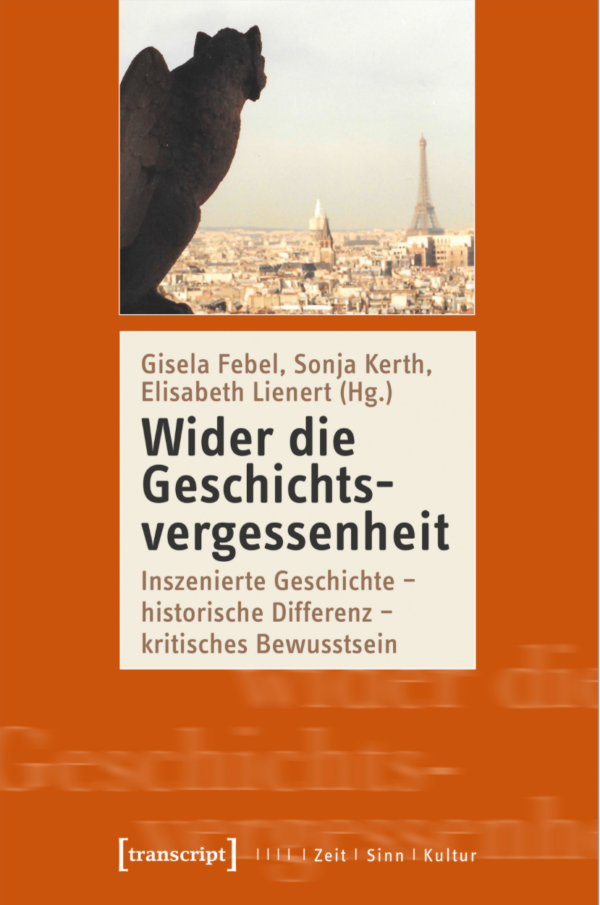
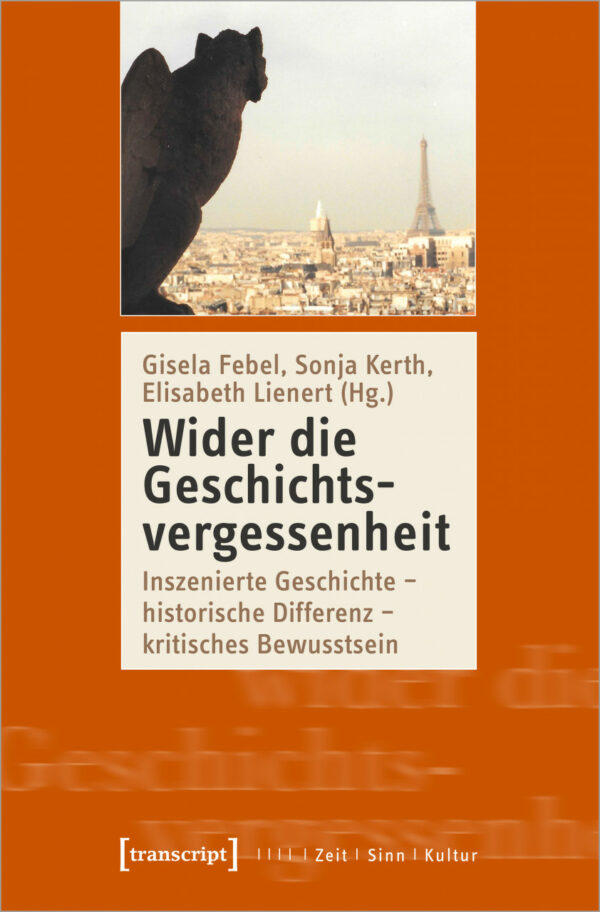 Wider die Geschichtsvergessenheit. Inszenierte Geschichte – historische Differenz – kritisches Bewusstsein
In the face of growing populism and right-wing radicalism, the fight against historical forgetfulness in thought and action is once again highly topical. At first glance, however, forgetting history – at least in relation to the pre-modern era – hardly seems to be an issue: The Middle Ages, Renaissance and early modern period are experiencing a boom in novels, dramas and popular media. But here in particular, there is an urgent need for an active response to simplifications, mythifications and falsifications. The contributors to this volume show that it is essential for a critical consciousness to recognize historical difference and media filters and to reflect on their effects.
-
 Mimikry der Marginalität
In L. Auteri, N. Barrale, A. Di Bella & S. Hoffmann (eds.), Jahrbuch für Internationale Germanistik: Wege der Germanistik in transkultureller Perspektive, Akten des XIV. Kongresses der Internationalen Vereinigung für Germanistik (IVG), Vol. 6, 511-515. Bern: Lang. DOI: 10.3726/b20759
-
 Natalja Gorbanewskaja. Graphic Novel
“She was a poet as great as Joseph Brodsky and a human rights activist as fearless as Andrei Sakharov. Unlike Brodsky, however, she did not receive the Nobel Prize for Literature, and unlike Sakharov, she did not receive the Nobel Peace Prize. However, her name is associated with a unique event in the Soviet Union: On August 25, 1968, she and seven other young people came to Red Square to demonstrate openly against the regime – and against the suppression of the Prague Spring by tanks from the Soviet Union and other Warsaw Pact countries.”
-
 Schichten von Geschichte in aktueller Nibelungenrezeption
In Febel, Gisela, Sonja Kerth & Elisabeth Lienert (eds.) Wider die Geschichtsvergessenheit. Inszenierte Geschichte – historische Differenz – kritisches Bewusstsein. 39-53. Bielefeld: transcript. DOI: 10.1515/9783839459294-003