Publications
-
 Mythos Zuhören – Bemerkungen zur Diskursphänomenologie gerichteter Aufmerksamkeit
Based on the omnipresence of euphemistic talk about listening, the essay examines the network of relationships between listening and discourse. A widespread myth, in which listening is understood in isolation as a replicative action and the imponderables of listening are systematically covered up, is contrasted with the assumption that listening is language in contradiction and as such constitutive for discourse and vice versa. The question is about the possibilities of a sociolinguistics of listening and in particular about a conceptual classification of listening in the field of tension between the positivity of speech and the intentionality of listening. I speak of discourse phenomenology, without overlooking the fact that this also breaks up a scientific-historical juxtaposition of discourse analysis and phenomenology.
-
 Zeitliche Vielfalt – Erscheinungsformen von Zeit und die Aufgabe der Philosophie
Proceedings of the symposium Zeit · Geist · Gehirn. Neurowissenschaft und Zeiterleben 2021.
-
 Memorialising the Holocaust in Human Rights Museums
This book provides an analysis of the forms and functions of Holocaust memorialisation in human rights museums by asking about the impact of global memory politics on how we imagine the present and the future. It compares three human rights museums and their respective emplotment of the Holocaust and seeks to illuminate how, in this specific setting, memory politics simultaneously function as future politics because they delineate a normative ideal of the citizen-subject, its set of values and aspirations for the future: that of the historically aware human rights advocate.
-
 Why Collective Memory can never be Pluriversal. A Case for Contradiction and Abolitionist Thinking in Memory Studies
Bringing together memory studies with the emerging field of contradiction studies, in this article, I suggest the need for an alternative way of thinking about collective memory by juxtaposing the ideal of wholeness that necessarily underlies any group’s identity with that of the inevitable contradiction of the plurivers. I discuss the power of the Western narrative order in regard to the Haitian Revolution and examples of mnemonic disharmony in contemporary Germany and seek to illuminate the epistemic violence constitutive of this narrative order. The article therefore interrogates memory study’s epistemological foundation and the practices in which these underpinnings result. The aim is to highlight the potential of contradiction in an attempt to pluriversify responses to the past as well as future visions for the worlds we live in. Special attention is paid to the question of what it is we hope for when attempting to (scholarly) contribute to making collective memory more inclusive, and where the limitations of this might lie. The purpose of my contribution, then, is to explore the tacit imperative of harmony that often remains unchallenged in memory studies, and to propose a shift in focus, from the ways in which memory might help us understand (e.g., current clashes of identities), toward a research agenda that is considerate of its own entanglements with power, yet, at the same time, lives up to its potential to contribute to transformation.
-
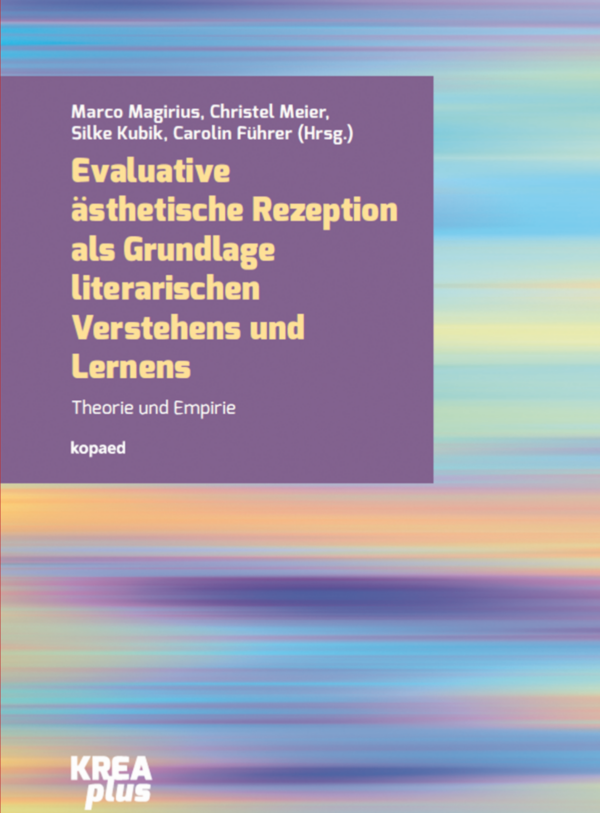 Gänsehaut, Liebe und Langeweile. Sprachliche Konstitution von Emotionen in Laienbuchrezensionen aus dem Schullektürekanon
In Meier, Christel, Carolin Führer, Marco Magirius & Silke Kubik (eds.) Evaluative ästhetische Rezeption als Grundlage literarischen Verstehens und Lernens: Theorie und Empirie (KREAplus Band 28) 243–256. Muenchen: kopaed. ISBN: 978-3-96848-095-4
-
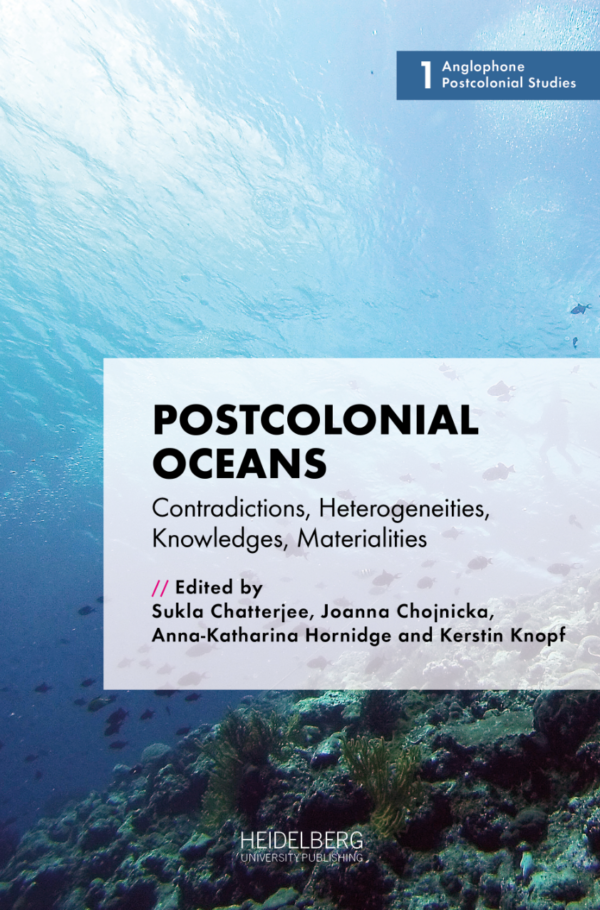 Postcolonial Oceans. Contradictions, Heterogeneities, Knowledges, Materialities
This book contributes to the study of oceans, seas, coastal waters, and rivers within blue humanities by broadening, circulating, and interweaving knowledge about such waters, ocean epistemologies, and sea narratives from pluriversal epistemological, geographical, cultural, and disciplinary perspectives. The contributors from Africa, Asia, the Caribbean, Europe, North America and the Pacific explore the interconnections between oceans, coastal areas, rivers, humans, animals, plants, organisms, and landscapes in the fields of cultural history and cultural studies, critical race and postcolonial studies, marine and environmental studies, linguistics, literature, film and media studies.
-
 Digitale Räume als Aushandlungsort für Zentralität und Marginalität
In Auteri, Laura, Natascia Barrale, Arianna di Bella & Sabine Hoffmann (eds.) Jahrbuch für internationale Germanistik. Wege der Germanistik in transkultureller Perspektive. Akten des XIV. Kongresses der Internationalen Vereinigung für Germanistik (IVG) 6: 511-515. Bern: Peter Lang Verlag.
-
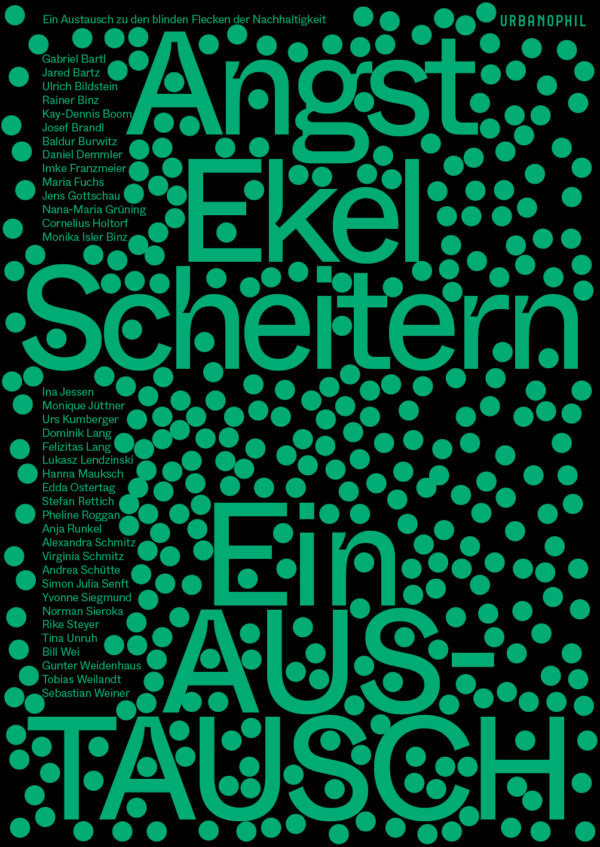 Ritual und Experiment – Versuch einer Annäherung an die Natur
The relationship between man and nature is subject to constant change. While nature was long considered threatening and alien, the idea of man in harmony with nature developed in the 16th century. Another profound change in this relationship has been accompanied by industrialisation and rapid urbanisation since the 19th century. The relationship between humans and nature is becoming unbalanced and jeopardises the survival of many species, including humans, on this planet. The environmental debate that has been ongoing since the 1960s has only been able to change this to a limited extent. Rather, there seems to be a persistent inability – a ‘blind spot’ – to (re)establish and maintain socio-ecological relationships with our habitat. The urgent question arises as to how we can get closer to nature again and which strategies appear helpful for this.
-
Introduction. Postcolonial Oceans. Contradictions, Heterogeneities, Knowledges, Materialities
In Chojnicka, Joanna & Hornidge, Anna-Katharina & Knopf, Kerstin & Chatterjee, Sukla (eds.) Postcolonial Oceans: Contradictions, Heterogeneities, Knowledges, Materialities, 1-19. Heidelberg: Heidelberg University Publishing. DOI: 10.17885/heiup.1046.c17297
-
 Babycaust? Keine Volksverhetzung! Die deutsche Justiz versagt bei der Bekämpfung von Holocaustverharmlosung und Aufstachelung zum Hass
In Nele Austermann, Andreas Fischer-Lescano, Heike Kleffner, Kati Lang, Maximilian Pichl, Ronen Steinke, & Tore Vetter (Hrsg.), Recht gegen rechts, 307–314. Frankfurt am Main: S. Fischer.
-
 Making a Theme Audible. Imparting Non-Discursive Knowledge in Natural Philosophy by Means of Poetry and Aphorism
This paper is about poetry as a vehicle for imparting knowledge in natural philosophy. It discusses the epistemological and cultural background against which early Greek thinkers such as Parmenides and Empedocles composed in verse, and it explores the rationale why poetry was thought to be a preferred means for transmitting important and often non-discursive knowledge about nature—in other words, how poetry was meant to make “a philosophical theme audible,” to prompt an insight that organizes a large field of experience. Much later, related assumptions find a (last) heyday in Goethe’s attempt to write a Naturgedicht in the vein of Lucretius. Even though new insights especially from classical German philosophy influenced Goethe, his reasons for writing nature poetry show striking continuities with those of his ancient peers. The paper ends with a brief look at later attempts to “make philosophical themes audible” in the context of an ever-increasing fragmentation of knowledge.
-
The Colonial Making of Bremen’s Peri-Urban Port Area
In Chojnicka, Joanna & Hornidge, Anna-Katharina & Knopf, Kerstin & Chatterjee, Sukla (eds.) Postcolonial Oceans: Contradictions, Heterogeneities, Knowledges, Materialities, 219-236. Heidelberg: Heidelberg University Publishing. DOI: 10.17885/heiup.1046.c17310
-
 Die Region Bremen. Herausforderungen der regionalen Verflechtung der Stadt Bremen mit ihrem niedersächsischen Umland
Arbeit und Wirtschaft in Bremen (43).
-
 Minorities and Majorities, Marginality and Centrality. An Introduction
In Hanna Acke, Silvia Bonacchi, Carsten Junker, Charlotta Seiler Brylla & Ingo H. Warnke (eds.), Religious and national discourses. Berlin/Boston: de Gruyter Volume 33 in the Series Diskursmuster/ Discourse Patterns eBook ISBN: 9783111039633 PrintISBN: 9783111027739
-
 Hagen von Tronje: Vom Antagonist zum Bösewicht zum Antiheld. Überlegungen zur diachronen Entwicklung und Rezeption einer Antagonistenfigur
In Moskopp, Werner & Stefan Neuhaus (Hrsg.), Figurationen des Bösen. Ein Kompendium, 185-198. Würzburg: Königshausen & Neumann.
-
 Philosophie der Physik. Eine Einführung
This volume offers a systematic and generally understandable introduction to philosophical questions in physics and its historical development. It begins with a presentation of important stages in the history of physics in antiquity, the early modern period and the past two centuries, and uses them to illustrate central epistemological features of physics. It discusses typical explanatory strategies, the role of experiments and predictions, the procedure for forming concepts and theories and the importance of mathematics.
-
 Introduction. Namwali Serpell’s The Old Drift: Disruption
Research in African Literatures 53(3). 1-22. https://www.muse.jhu.edu/article/900030
-
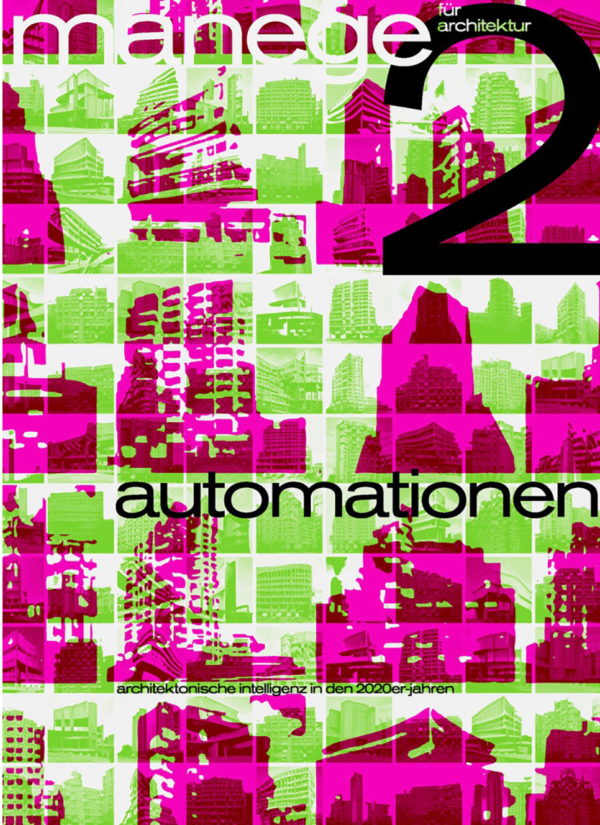 Neues Wahrnehmen
Manege für Architektur (Heft 2: Automationen). 36-37. https://mfa.one/manege-2/
-
 State of the Planet. Homi Bhabha and Namwali Serpell in Conversation
After explaining the rationale for bringing the author of The Old Drift, Namwali Serpell, and critical theorist Homi Bhabha into conversation, this interview with both of them explores some of the key themes of Serpell’s novel in relation to its wider geopolitical and historical context. Beginning with how we can understand the state of the planet in the present historical moment, the discussion expands to explore the broad context of more themes in the novel, which includes the place of gender and sexual politics, a global pandemic in a time of national and financial closures, cosmopolitanism, the space race and reverberations of the Cold War in the present, and the continued relevance, if any, of postcolonial theory, technology, revolution, and futurity.
-
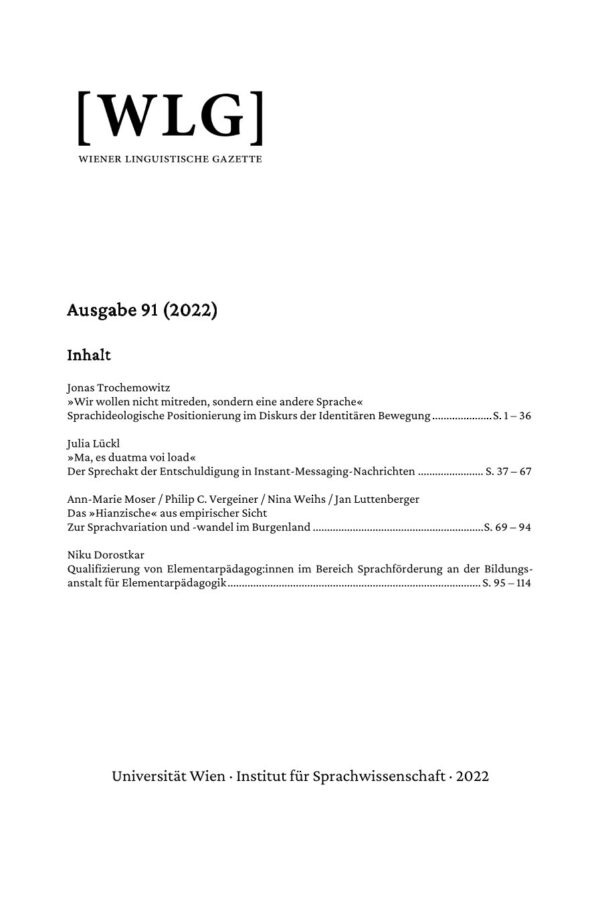 Wir wollen nicht mitreden, sondern eine andere Sprache. Sprachideologische Positionierung im Diskurs der Identitären Bewegung
In Wiener Linguistische Gazette (WLG) 91 (2022). 1-36.