Publications
-
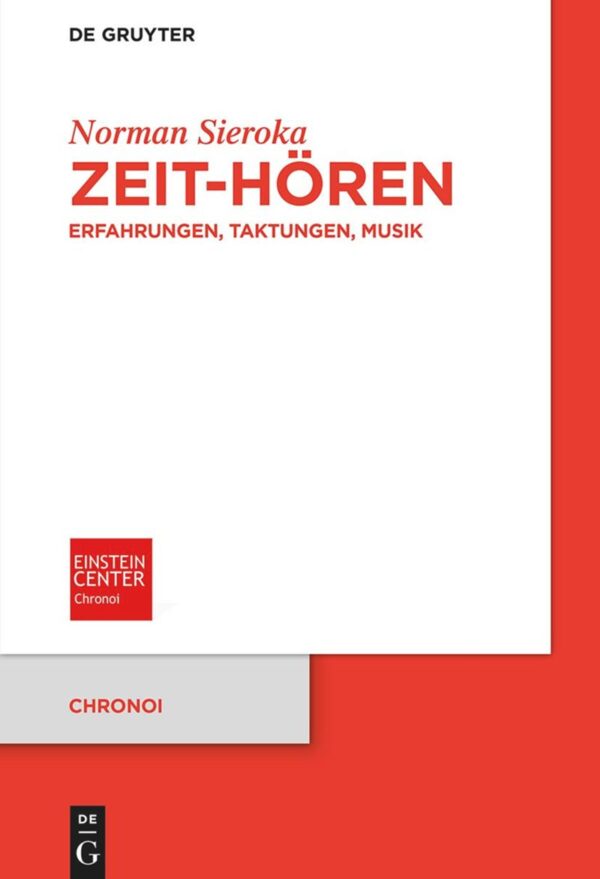 Zeit-Hören: Erfahrungen, Taktungen, Musik
This volume shows why it is misleading to view time as an object, exploring the insights that can be gained from analogies between sequences and by comparing event timings. Incorporating extensive references to music and, more broadly, to the act of listening provides illuminating glimpses into these fundamental structural properties of reality.
-
 Staged Dissent – »Change My Mind« as a Vehicle of Instrumental Deliberation within the Identitäre Bewegung Österreich
In this paper Jonas Trochemowitz and Lara Herford aim to analyze the talking format of Change my Mind by Steven Crowder and its adaptation by the former spokesperson of the right-wing extremist group Identitäre Bewegung in Austria. By employing the concept of ›genre of dissent‹ we ask the question how democratic values of deliberation are strategically used to gain legitimacy for far right positions in discourse.
-
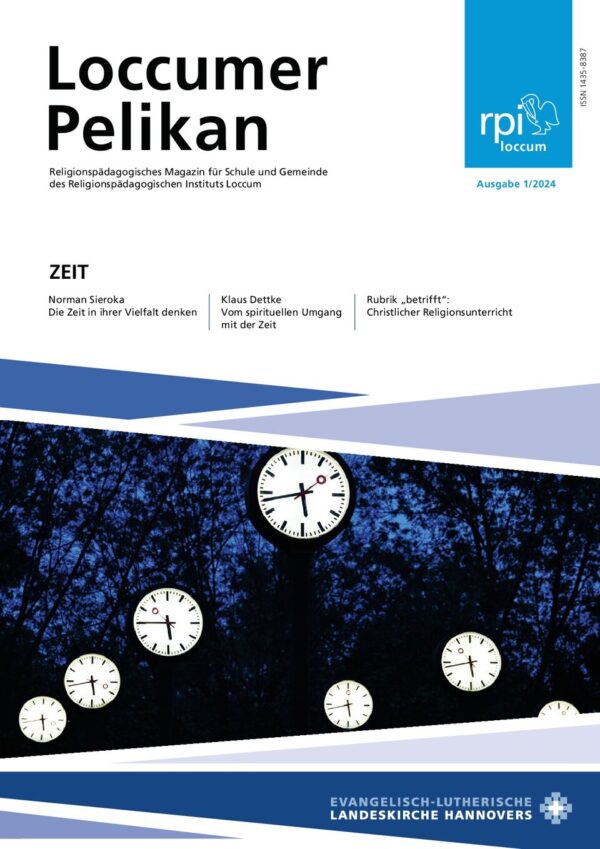 Die Zeit in ihrer Vielfalt denken – Anmerkungen aus philosophischer Perspektive
Corona infections, childhood memories, presidential elections, avalanches: everything we experience and witness and all external events can be ordered in time – according to their succession. Time is therefore an ordering parameter, or dimension, of events. There is disagreement about what else time is on the “battlefield of eternal disputes” – as Kant once called philosophy (or more precisely: metaphysics): Is time relative or absolute? Is it continuous or discrete? Is it a substance in its own right or is it constituted by relationships between events?
-
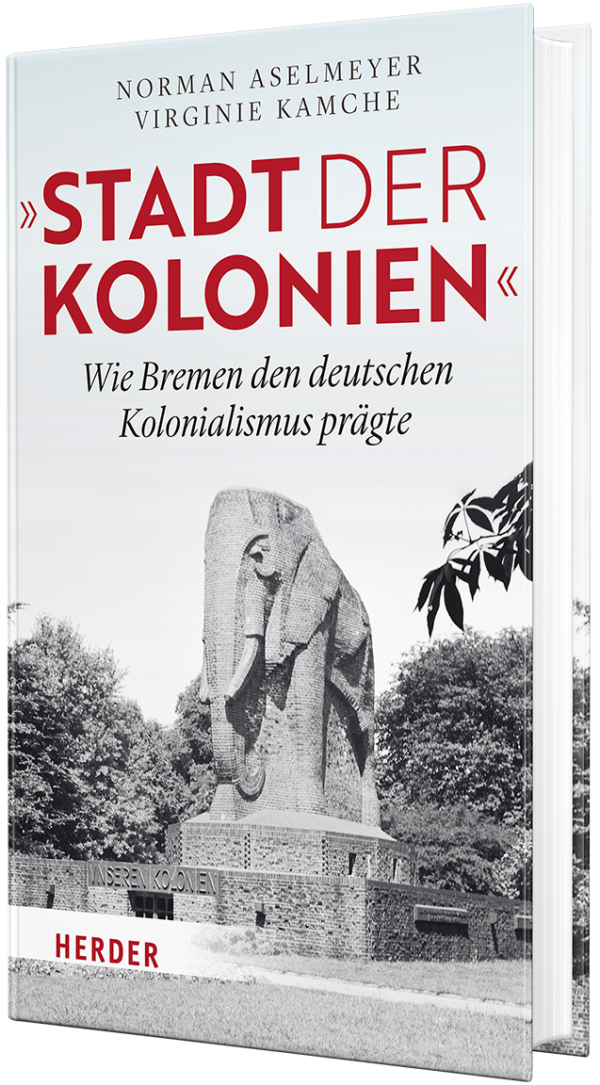 Die Überseestadt: Spiegel kolonialer Verhältnisse
The Bremen Überseestadt, constructed as a new harbor between 1875 and 1913, reflects the close connections between harbor infrastructure and European colonialism. The increase in cargo handling, particularly of colonial commodities, necessitated new port facilities and the deepening of the Weser River. Despite its transformation into a modern urban area, the colonial past remains inadequately addressed to this day. The text calls for making the colonial entanglements visible as an integral part of Bremen’s trade history.
-
 Transnational-Resilient Democracy. On the Conditions for Party Ban Proceedings in Interlegal Systems
On 13.11.2024, a group of 113 members of the German Bundestag tabled a motion to initiate proceedings to ban the Alternative for Germany (AfD) party. The debate to date has focused on the requirements and prospects of success of a (partial) ban of the party from a constitutional perspective (in particular here and here). The national perspective threatens to distort the view of transnational interlegalities and does not do justice to the state of European integration.
-
Paradoxien des Auditiven? Ambiguitäten und Diskrepanzen beim Hören und in der Musik
In the psychology of music and basic auditory research, there is talk of “paradoxes of hearing” or “musical paradoxies” (Deutsch 1986, 275-280; Utz 2015, 22-52; Deutsch 1995). But can auditory impressions really be paradoxical? What exactly should it mean what exactly should it mean to “hear paradoxes” or even to “hear paradoxically”? We will pursue this question in the following and in doing so, we will first define the concept of paradoxia for the present context – namely in the sense of ambiguity and discrepancy ambiguity and a discrepancy. We will then develop a typology, which at the same time shows the fundamental significance that ambiguities have for music – or more precisely: for the enduring appeal of pieces of music.
-
 Agentiver und Nonagentiver Widerspruch. Eine Kartographie der linguistischen Widerspruchsforschung
Publication of the University of Bremen and University of Vienna international student conference »Debattieren, Opponieren, Protestieren – Interdisziplinäre Perspektiven auf sprachliche Praktiken des Widersprechens« 2023.
-
 Ethnographie als Werkzeug (in) der Rechtswissenschaft
Legal research is usually done at a desk, discussions are possible by telephone and even archives are usually accessible online, and most work is based on academic literature. But what insights, perspectives and research subjects are missed by legal research for which researchers do not leave their desks? And how can the gaps be filled?
-
 Sounds of Democracy: The Interview as an Instrument of Heuristic Attention to Discursive Voices
Against the backdrop of general considerations of the interview as a genre, the paper discusses under which theoretical conditions interviews are suitable instruments for discourse analysis. With a special interest in questions of the linguistic constitution of shared knowledge in discourse, the authors outline the discourse-linguistic status of interviews in a systematic way.
-
 Nachhaltig nicht-nachhaltig. Rechte indigener Gruppen im Freihandelsabkommen EU-Mercosur
European demand for raw materials is growing as part of the energy transition. Many of the raw materials required for the energy transition are located on the territories of indigenous peoples, which often leads to conflicts. Against this backdrop, it is surprising that the planned agreement between the EU and the Mercosur states does not contain any provisions regarding the participation and protection of indigenous peoples. A reference to such provisions, in particular from ILO Convention 169, would be required under international law and would help to make the conflicts and contradictions of the concept of sustainability negotiable.
-
 Diskurs ist Widerspruch
Introduction to the special issue Widersprüche.
-
 Agency and Incentives of Diasporic Political Influencers on Facebook Malawi
This article examines the agency and incentives that drive the activism of diasporic political influencers on “Facebook Malawi,” an online imagined political community. In their seminal work on “social media dissidents” and “social media self-made activists” in the Global South, Matsilele and Sharra demonstrate that social media activists engage with different strategies to initiate movements, mobilize citizens, and create their brands in strong opposition to authoritarian regimes which repositions them as freedom fighters in the eyes of the masses and enemies of the state. Correspondingly, we frame diasporic political influencers as actors aided by digital technologies who engage in “long-distance nationalism” on Facebook against authoritarianism in the homeland. We deploy a qualitative mixed methods approach to analyze Facebook data of two diasporic political influencers, Onjezani Kenani and Manes Winnie Hale, who gave informed consent to use their Facebook data generated in 2018 and 2021, a period preceding and following the 2019 Malawi tripartite elections. A thematic analysis of 250 Facebook posts and interview data with the two influencers illustrates how they exercise their agency in their quest for a vision of a better Malawi while navigating a complex and ambivalent web of online and offline threats, incentives, and interests. Implicated in the political communication and mobilization of the two are different strategies that include verbal inventiveness, trolling, and exposing. The article also shows how the concept of long-distance nationalism needs to be adapted in studying diasporic political influencers.
-
 Corps et capital dans le roman français du XIXe siècle. Körper und Kapital im französischen Roman des 19. Jahrhunderts
The living body and the capitalist thinking of the modern economy seem to be irreconcilable objects. Nevertheless, their history and perception have been inextricably linked, at least since the times of industrialization and capitalization in the 19th century. Our volume follows this entangled history and the various contradictions it develops.
Since Pierre Bourdieu, we known that the body forms an incorporated cultural and social capital. It is a commodity and means of production, a sign of belonging to a social class, a place where sex, gender and power relations are negotiated or a pretext for social exclusions and racism. The body is the object of punishments, sanctions and social control, a support for affects, obsessions and illnesses as well as a site of rebellion and resistance. The 19th century novels analyzed in the contributions to this volume tell all this. From the perspective of current body studies, we propose a new reading of the great stories from Balzac to Zola, via Mirbeau, Maupassant, Louise Michel, Georges Sand, Rachilde, Eugène Sue and Huysmans to demonstrate, through their texts, how the images of the body and the policies of capital are entangled and, thus, form a central part of the imagination and the memory of 19th century French (and Northern/Western) society.
Contributions in French and German.
-
 Contradiction Studies – Exploring the Field. An Introduction
Since antiquity in Greece, the Law of Non-Contradiction (LNC) is considered to be the foundation of all philosophy. As Aristotle maintains in Metaphysics, “the same attribute cannot at the same time belong and not belong to the same thing and in the same respect” (1005b, 19–23).
-
 Aristokratie der Buchreligionen? Heilige Schriften aus religionswissenschaftlicher Perspektive
In Konrad Schmid (ed.) Heilige Schriften in der Kritik. XVII. Europäischer Kongress für Theologie (5.-8. September 2021 in Zürich). 643-658. Leipzig: Evangelische Verlagsanstalt. DOI: 10.5771/9783374072286
-
 Multidirektionale Lexik in der Diskursgeschichte des 20. Jahrhunderts
In Friedrich Markewitz, Stefan Scholl, Karsten Schubert & Nicole Wilk (eds.), Kommunikative Praktiken im Nationalsozialismus. 173–205. Göttingen: V&R unipress. ISBN: 978-3-7370-1612-4
-
Widerspruchsresponsive Nachhaltigkeit
The EU’s free trade agreement with New Zealand fails to establish a critical concept of sustainability On July 9, 2023, the European Union and Aotearoa New Zealand concluded a comprehensive free trade agreement, which the European Commission describes as the most ambitious agreement ever with regard to sustainability issues. A closer look reveals that the scope of regulation is more comprehensive and progressive in many respects than in other agreements. Nevertheless, deficits can be identified in the design of the dispute settlement procedure, which are also due to the fact that the sustainability chapter is unable to establish a critical concept of sustainability that is sensitive to its contradictions. Findings from Contradiction Studies can help to fill this gap. Contradictions are associated with the concept of sustainability as it is used in the agreement. Only its recognition makes it possible to negotiate these contradictions at a legal level. To this end, the dispute settlement procedure must be made more effective with the involvement of civil society actors.
-
 Working Paper “Einrichtungsantrag Contradiction Studies – Konstellationen, Heuristiken und Konzepte des Widersprüchlichen, Lesefassung”
The Research Training Group 2686 Contradiction Studies researches the formation, negotiation and explanatory limits of contradiction.
The point of departure is the assumption that the ordering figure of contradiction with the imperative to resolve contradictions is often in tension with everyday experiences of contradictions in living together. Constellations of contradiction, contradiction avoidance, contradictions and practices of contradiction are therefore systematically researched and established as objects of investigation in the humanities, social sciences and law. The research group combines discourse-, narrative- and text-centred approaches with ethnographic and other qualitative-empirical methods. On the basis of case studies and genealogically or analytically orientated projects, the Centre carries out conceptual and theoretical work. This aims to re-evaluate contradiction, contradictions and contestation in their empirical constellations, heuristic functions and ontological dimensions – also in response to post- and decolonial discussions on the cosmopolitanisation of knowledge production.
-
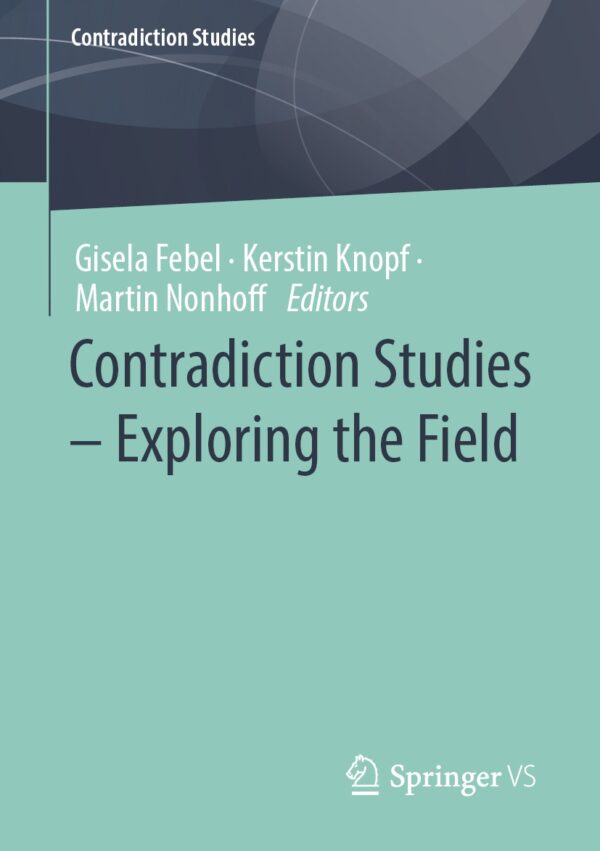 Contradiction Studies – Exploring the Field
“Contradiction” is a core concept in the humanities and the social sciences. Beside the classical ideas of logical or dialectical contradiction, instances of “lived” contradiction and strategies of coping with it are objects of this study. Contradiction Studies discuss the many ways in which explicit or implicit contradictions are negotiated in different political or cultural settings. This volume collects articles that tackle the concept of contradiction, practices of contradicting and lived contradictions from a number of relevant perspectives and assembles contributions from linguistics, literary studies, philosophy, political science, and media studies.
-
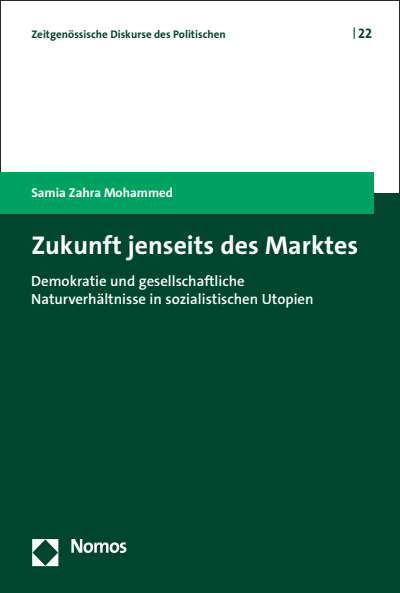 Zukunft jenseits des Marktes. Demokratie und gesellschaftliche Naturverhältnisse in sozialistischen Utopien
The almost constantly recurring crises of the democratic order and relations between humans and nature in our age of the Capitalocene are currently reviving debates on economic models beyond the capitalist market economy.