Articles & Papers
-
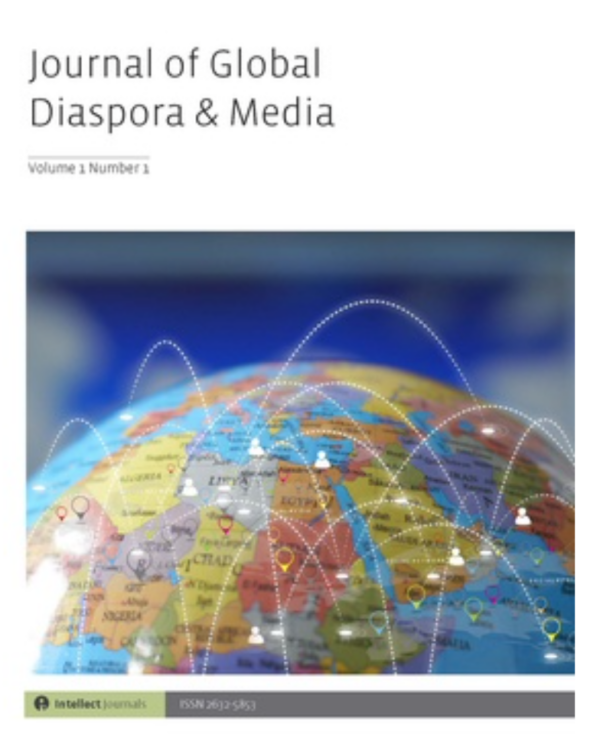 How to Shape Black Diasporic Identity in France by Reading (About) Literature
This article gives an overview of francophone African diasporic websites such as Africultures.com, africavivre.com and other digital magazines, networks and blogs that are present on different platforms. Taking recent novels, texts of liter- ary criticism, reviews and comments as examples, I analyse in what way they share in discourse about diasporic and migratory identity positions of Afropéens (‘Afropeans’) (and differ therein from other readings of the same novels). Methodologically, I draw on Stephen Greenblatt’s concepts of self-fashioning and circulation of social energy as well as on Pierre Bourdieu’s notion of the produc- tion of social capital. With respect to socially preformed discursive formation of Black people as an ostensibly homogeneous minority in the twenty-first century France, I refer to Pap Ndiaye’s ground-breaking study La condition noire from 2009 which closely analyses the complex situation of the Black migrant and post- migrant population. I focus on two narrative texts which are widely perceived both in France and on an international level: First, the autobiographically inspired novel Le Ventre de l’Atlantique (The Belly of the Atlantic) by Fatou Diome and second, Marie Ndiaye’s narrative triptych Trois femmes puissantes (Three Strong Women). Studying remarks and comments of literary criticism concern- ing these texts on francophone African diasporic websites, I raise the following questions: What relevance do these narrated characters (still) have today? To what extent do they shape the discourse of Black migrants in France? What kind of interpretation of the colonial history and context do they offer? And which emancipatory moments and decolonial strategies create a new, proper symbolic capital and, thus, add to the Imagined Community of ‘Noirs en France’ (‘Black people in France’)?
-
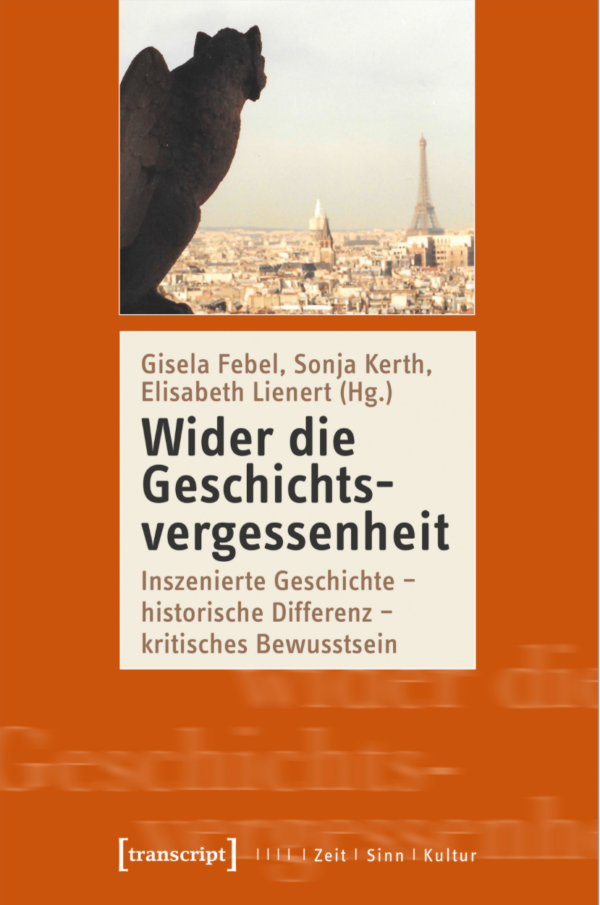 Geschichtsdenken in historischen Romanen über die Vormoderne
In the face of growing populism and right-wing radicalism, the fight against historical forgetfulness in thought and action is once again highly topical. At first glance, however, historical forgetfulness – at least in relation to the pre-modern era – hardly seems to exist: The Middle Ages, Renaissance and early modern period are experiencing a boom in novels, dramas and popular media. But here in particular, there is an urgent need for an active response to simplifications, mythifications and falsifications. The contributors to this volume show that it is essential for a critical consciousness to be aware of historical difference and media filters and to reflect on their effects. In the face of growing populism and right-wing radicalism, the fight against historical forgetfulness in thought and action is once again highly topical. At first glance, however, historical forgetfulness – at least in relation to the pre-modern era – hardly seems to exist: The Middle Ages, Renaissance and early modern period are experiencing a boom in novels, dramas and popular media. But here in particular, there is an urgent need for an active response to simplifications, mythifications and falsifications. The contributors to this volume show that it is essential for a critical consciousness to recognize historical difference and media filters and to reflect on their effects.
-
 Contradiction Studies – Exploring the Field. An Introduction
Since antiquity in Greece, the Law of Non-Contradiction (LNC) is considered to be the foundation of all philosophy. As Aristotle maintains in Metaphysics, “the same attribute cannot at the same time belong and not belong to the same thing and in the same respect” (1005b, 19–23).
-
 Between Fantasy and Horror: La nuée (2020) by Just Philippot as a Film about the Ecological Crisis of the Anthropocene
This contribution deals with the contradictions of nature and agricultural economy in the contemporary moment of crisis in the Anthropocene. It is based on an analysis of the fantastic French film La nuée (The Swarm) by Just Philippot who reflects by this film also on the turning points from the preception of reality to obsession and from the uninjured body to the damaged body, or even from live to death resepctiveley from live instinct to death drive.
-
 Sounds of Democracy: The Interview as an Instrument of Heuristic Attention to Discursive Voices
Against the backdrop of general considerations of the interview as a genre, the paper discusses under which theoretical conditions interviews are suitable instruments for discourse analysis. With a special interest in questions of the linguistic constitution of shared knowledge in discourse, the authors outline the discourse-linguistic status of interviews in a systematic way.
-
 Why Collective Memory can never be Pluriversal. A Case for Contradiction and Abolitionist Thinking in Memory Studies
Bringing together memory studies with the emerging field of contradiction studies, in this article, I suggest the need for an alternative way of thinking about collective memory by juxtaposing the ideal of wholeness that necessarily underlies any group’s identity with that of the inevitable contradiction of the plurivers. I discuss the power of the Western narrative order in regard to the Haitian Revolution and examples of mnemonic disharmony in contemporary Germany and seek to illuminate the epistemic violence constitutive of this narrative order. The article therefore interrogates memory study’s epistemological foundation and the practices in which these underpinnings result. The aim is to highlight the potential of contradiction in an attempt to pluriversify responses to the past as well as future visions for the worlds we live in. Special attention is paid to the question of what it is we hope for when attempting to (scholarly) contribute to making collective memory more inclusive, and where the limitations of this might lie. The purpose of my contribution, then, is to explore the tacit imperative of harmony that often remains unchallenged in memory studies, and to propose a shift in focus, from the ways in which memory might help us understand (e.g., current clashes of identities), toward a research agenda that is considerate of its own entanglements with power, yet, at the same time, lives up to its potential to contribute to transformation.
-
 Als Wien zum Zentrum des tschechoslowakischen Dissens‘ wurde
Publication in the “Archivale des Monats” series of the Research Center for Eastern Europe Studies Bremen. Als Wien zum Zentrum des tschechoslowakischen Dissens‘ wurde. Bremen: Forschungsstelle Osteuropa. www.forschungsstelle.uni-bremen.de
-
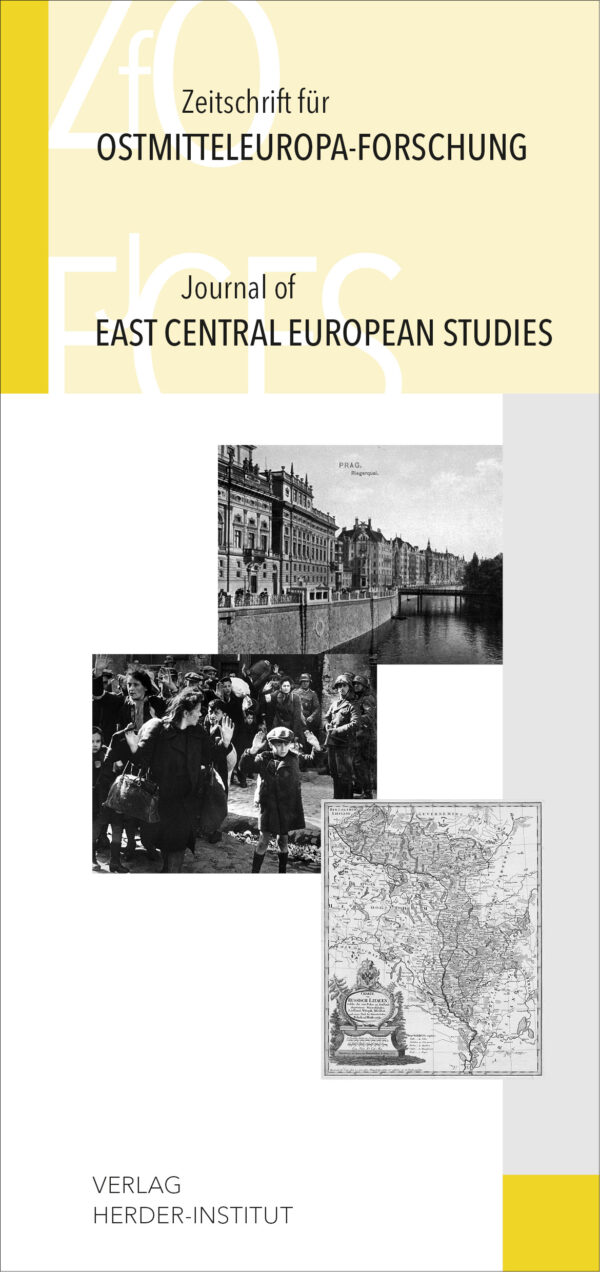 Review: Nationsbildung und Außenpolitik im Osten Europas
Review of the edited volume Nationsbildung und Außenpolitik im Osten Europas. Nationsbildungsprozesse, Konstruktionen nationaler Identität und außenpolitische Positionierungen im 20. und 21. Jahr-hundert (ed. Bianka Pietrow-Ennker).